 Guide: birds in winter


What to buy
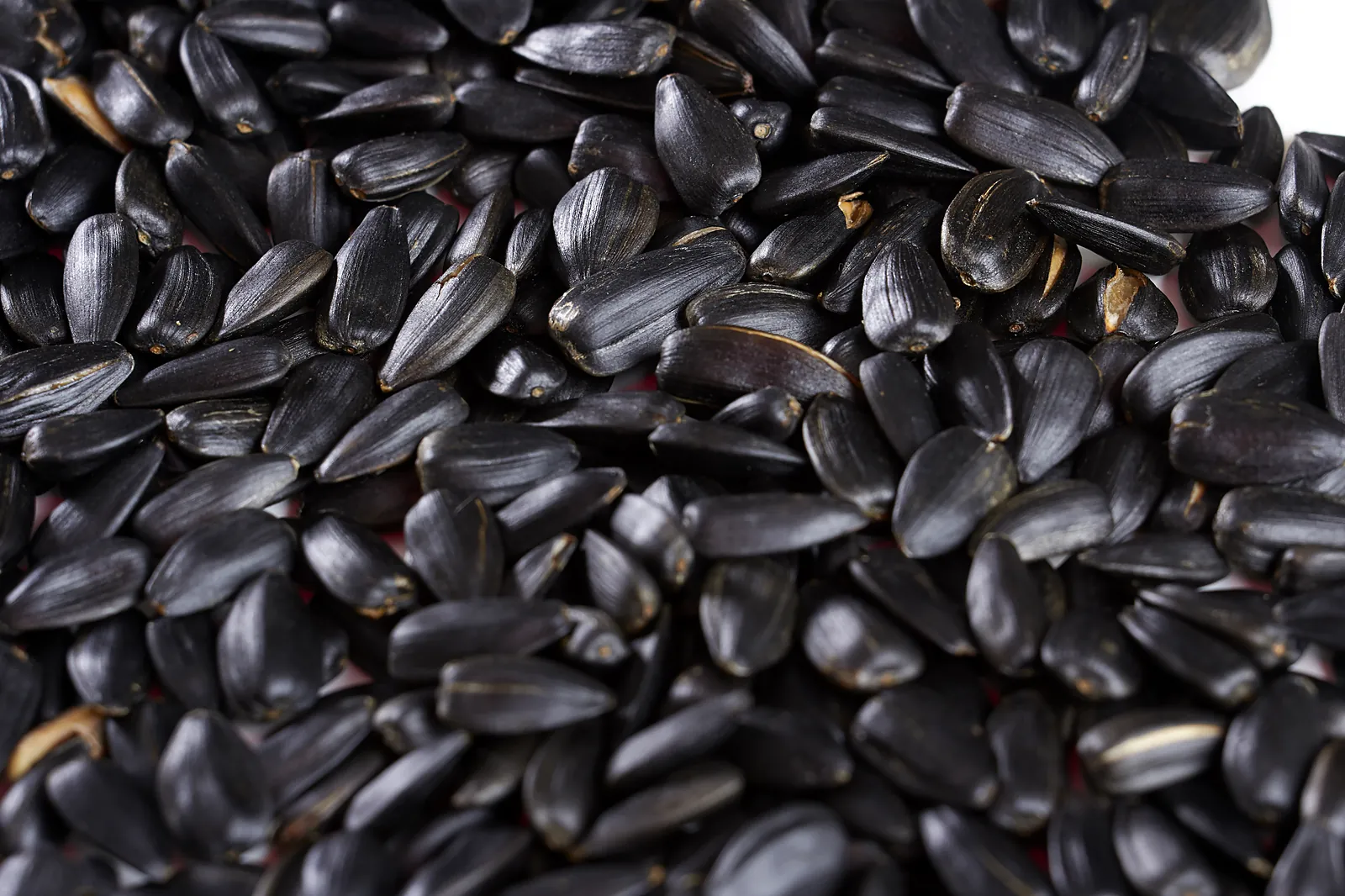
- sunflower for birds: The basic winter food for the feeder, eaten by tits, house sparrows and greenfinches, among others.
- Food for overwintering birds: Ready-made food for the feeder, for overwintering birds.
- Megi Winter standard bird food: Basic food for wild birds at the winter feeder.
In brief
- The Polish Society for the Protection of Birds (OTOP) advises serving sunflower both hulled and unhulled.
- Sunflower is eaten by tits, greenfinches, house sparrows and tree sparrows, nuthatches, siskins, hawfinches and yellowhammers, among others.
- Serve sunflower fresh, dry, mould-free and unsalted, in small portions, as much as the birds will eat at once.
In this article
At domowypupil.pl
-
For wild birds
Sunflower for birds
from 8,93 zł incl. VAT Select options This product has multiple variants. The options may be chosen on the product page
What is the difference between sunflower hearts and sunflower seeds in the husk?
Both kinds, hulled and in the husk, are fine. The Polish Society for the Protection of Birds (OTOP) advises serving sunflower "both hulled and unhulled"1. The sources we use do not indicate which of them is better.
Seed in the husk is not an obstacle for birds. OTOP educational material describes seed-crackers as birds that feed on hard seeds, whose strong beaks "serve mainly for cracking seeds"2.
Practical differences: our observation
The differences below are simple observations, not recommendations from the sources. Sunflower hearts leave no husks in the feeder or beneath it. With sunflower in the husk, the bird cracks the seed itself, and the husks stay where the feeding takes place.
If husks build up in the feeder, remove them together with leftover food. OTOP advises clearing away uneaten leftovers so that food does not linger1.
Which birds eat sunflower?
Sunflower attracts many species that visit feeders. Among its fans, OTOP lists1:
"sunflower is the most popular (both hulled and unhulled)"
OTOP, "What to feed and how?"
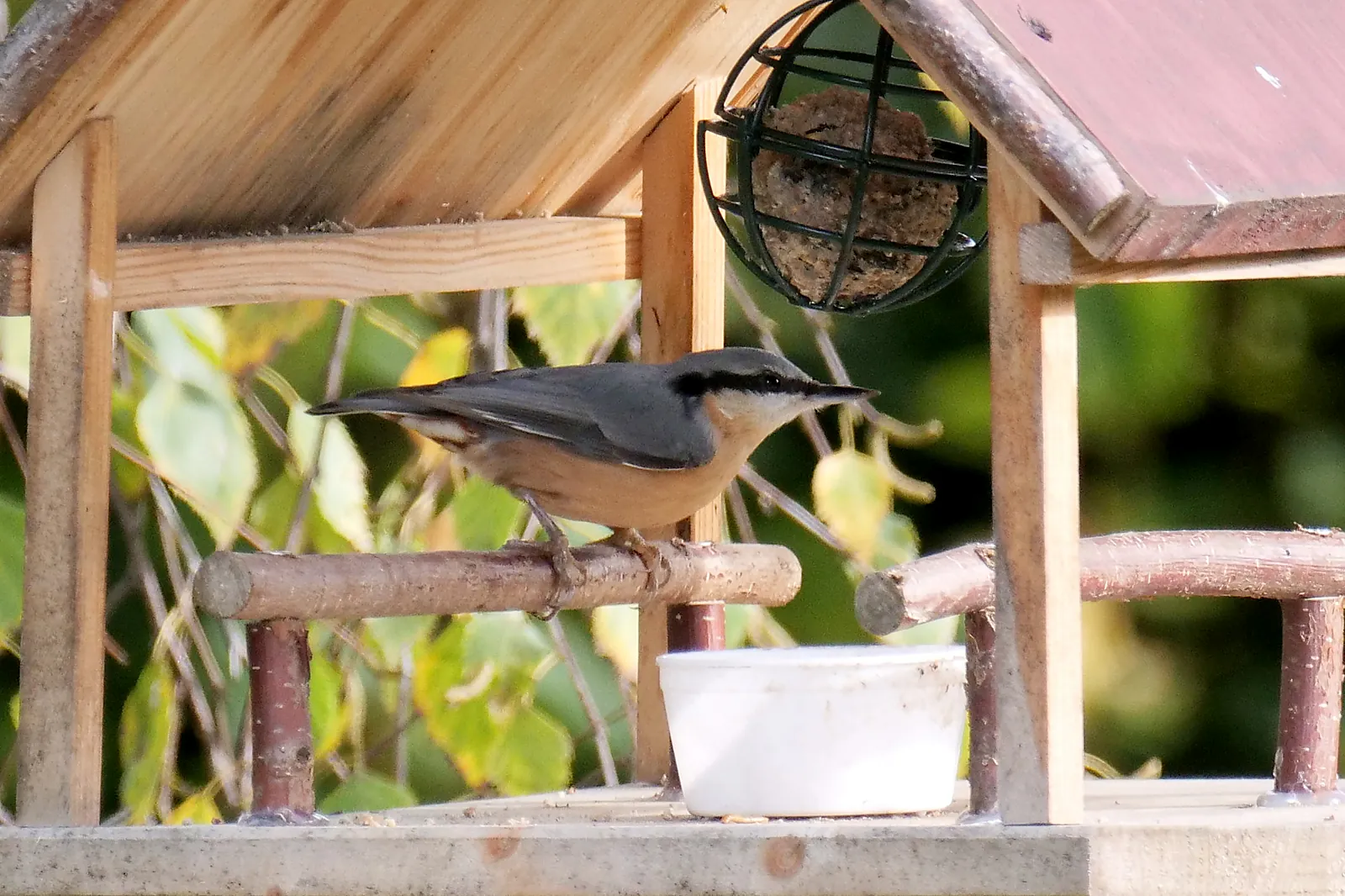
- tits
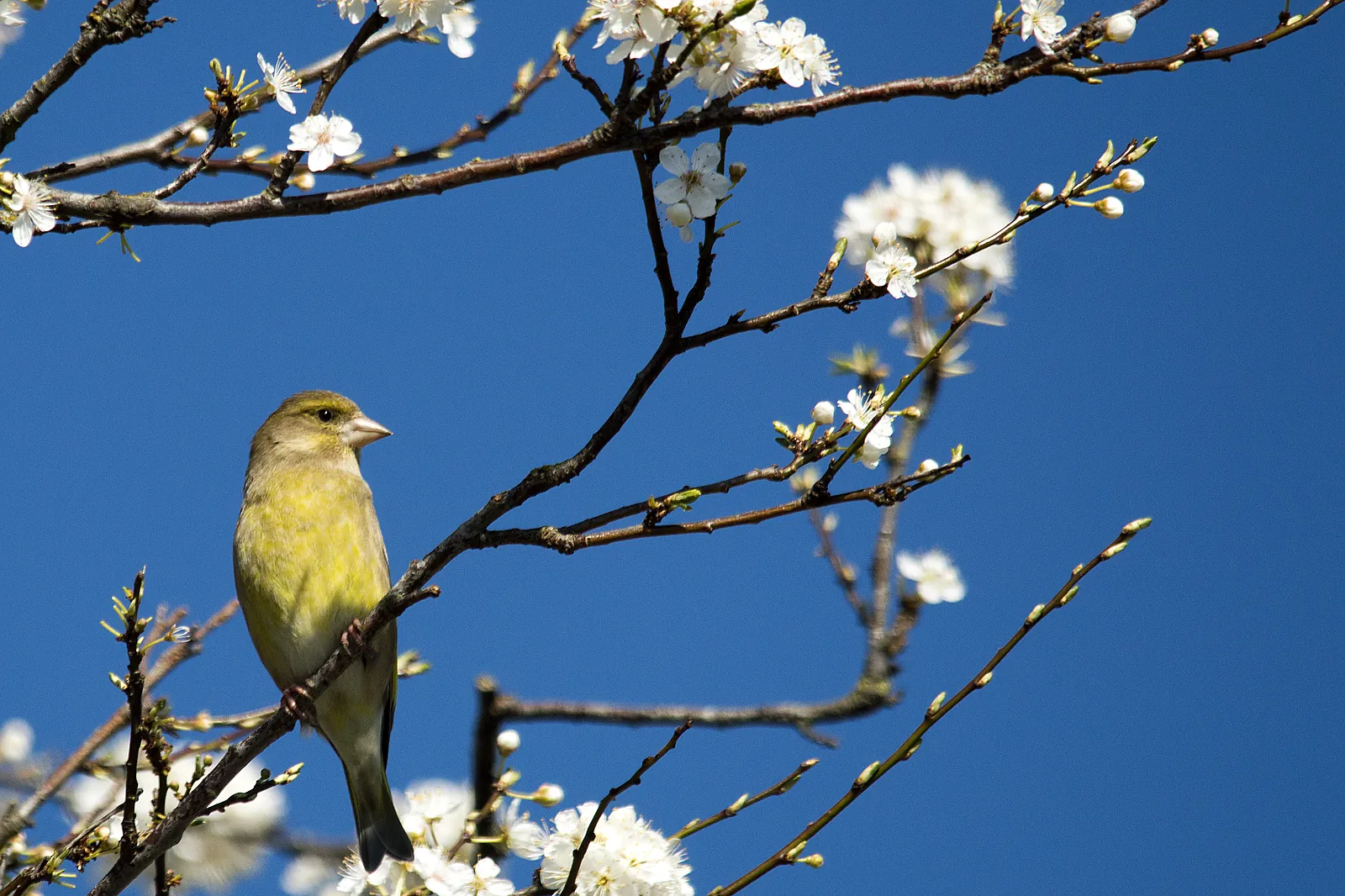
- greenfinches
- house sparrows and tree sparrows
- nuthatches
- siskins
- hawfinches
- yellowhammers
OTOP educational material describes greenfinches, siskins and hawfinches in the section on seed-crackers, that is, birds with strong beaks for cracking seeds2. For them the husk is not a problem.
If your feeder is visited mainly by tits, also read what tits eat in winter. Sunflower is only one of the foods that OTOP recommends for winter1.
What sunflower is suitable for birds?
Fresh, dry and mould-free. OTOP stresses that the seed must be dry and fresh, and that mouldy, musty and damp grains are not suitable for birds1. More important than whether sunflower sunflower is hulled is whether it is fresh and dry.
More important than whether sunflower is hulled is whether it is fresh and dry.
Sunflower must also be unsalted. The General Directorate for Environmental Protection (GDOŚ) notes that bird food must not contain salt3. Do not give birds seasoned sunflower meant for people.
Wet food quickly goes mouldy, so serve only as much as the birds will eat at once1. What else to avoid is described in the guide what to feed birds in winter.
Key points
- Both kinds, hulled and in the husk, are fine.
- More important than whether sunflower is hulled is whether it is fresh and dry.
- Sunflower must also be unsalted.
- Serve only as much as the birds will eat at once.
Please note. Serve only dry and fresh sunflower: wet food quickly goes mouldy and so harms birds1.
Where should sunflower be put out for birds?
Preferably in a feeder hung high, out of reach of cats. OTOP educational material advises hanging the feeder at a suitable height, not on a post that cats can easily climb2. GDOŚ gives a height of at least 1.2 m above the ground3.
- Away from windows: do not mount the feeder on glazing or right next to it1.
- Near tall shrubs where birds can rest and hide from a predator1.
- Without a large floor on which droppings collect alongside the seeds, because such a feeder can spread disease2.
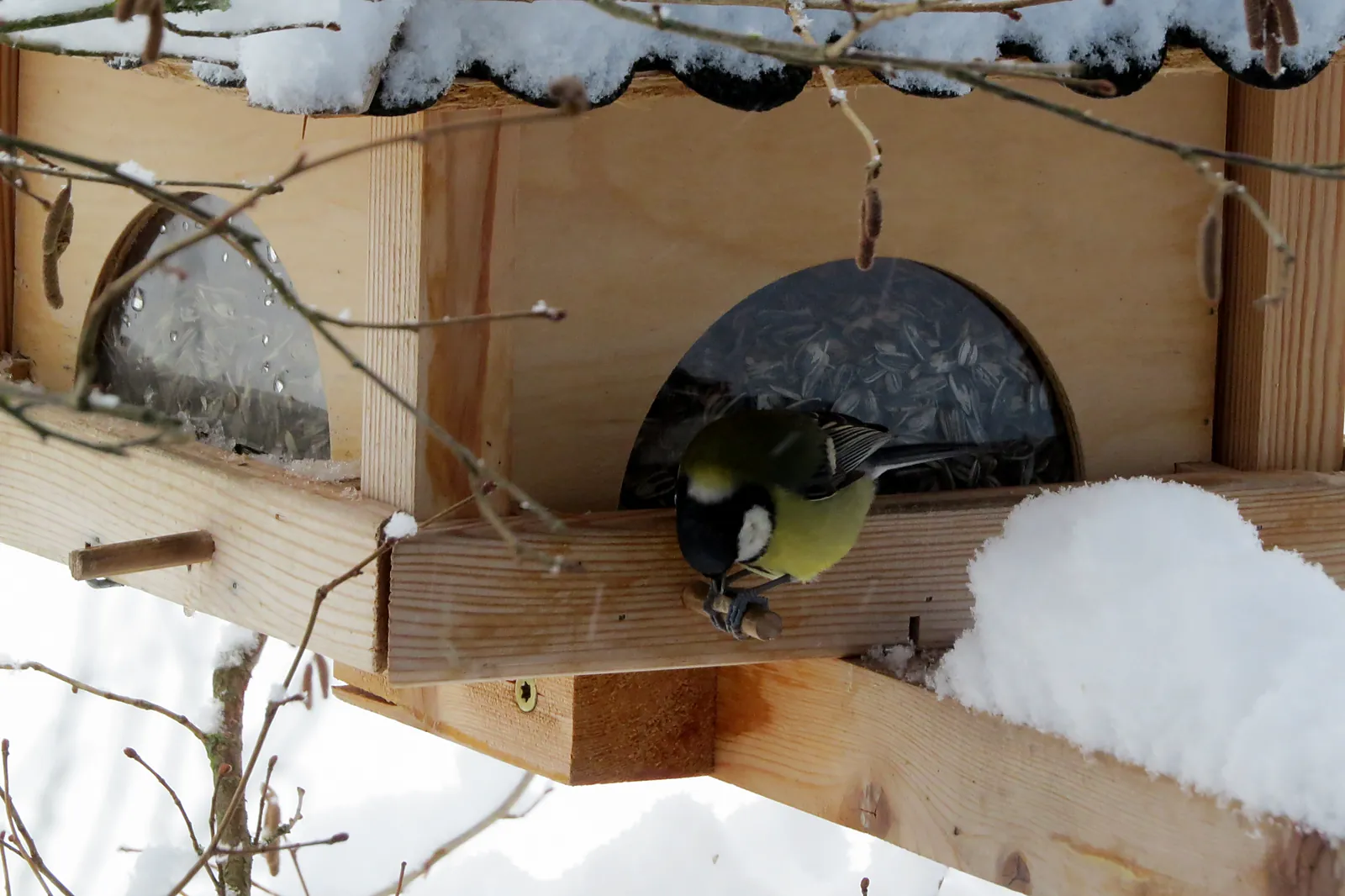
How to choose the feeder itself is described in the guide bird feeder: which to choose and where to hang it. Clean the feeder with hot water, without detergents1.
How much sunflower should be given to birds?
Little and often. OTOP advises serving only as much as the birds will eat at once, and GDOŚ advises putting only a little food in the feeder so that it does not spoil1,3. The sources do not give amounts in grams.
Top up the feeder regularly, because birds get used to the place where they find food1,3. When to start and when to finish is covered in the guide when to feed birds.
GDOŚ notes that there is no universal mix for all species3. So serve sunflower alongside other foods, e.g. fat balls without netting. In the shop you will find sunflower for birds and other foods for overwintering birds.
Frequently asked questions
Is sunflower in the husk good for birds?
Yes. OTOP allows sunflower both hulled and in the husk, and seed-crackers have strong beaks for cracking seeds. The seed must be fresh, dry and free from mould.
Can birds be given salted sunflower?
No. GDOŚ notes that bird food must not contain salt. Give only unsalted sunflower.
Which birds eat sunflower in winter?
According to OTOP, among others tits, greenfinches, house sparrows and tree sparrows, nuthatches, siskins, hawfinches and yellowhammers. Sunflower therefore attracts many species at once.
How should sunflower for birds be stored?
The sources do not describe storage directly. OTOP requires the seed to be dry, fresh and free from mould, so keep it so that it does not get damp, and do not serve mouldy seed.
Sources
- OTOP, "What and how to feed?", by Monika Klimowicz-Kominowska, otop.org.pl
- OTOP, educational material "Czy dokarmiać ptaki? Ptaki miesiąca: sikory i łuszczaki" (PDF, archived material), otop.org.pl
- GDOŚ, "#PoPierwszeNieSzkodzić: feeding birds" (21.11.2022), gov.pl
Photos: photo: Dmitry Makeev, Wikimedia Commons, CC BY-SA 4.0, crop changed; photo: u278, Wikimedia Commons, CC0; photo: Jacob Spinks from Northamptonshire, England, Wikimedia Commons, CC BY 2.0, crop changed; photo: GT1976, Wikimedia Commons, CC BY-SA 4.0, crop changed.
Prepared by the domowypupil.pl editorial team on the basis of the sources listed above. The article is for information only and does not replace the advice of a vet.