 Guide: hamster


What to buy
- ZOO-BOX Premium Line: Food in versions for different rodents, including hamsters and chinchillas.
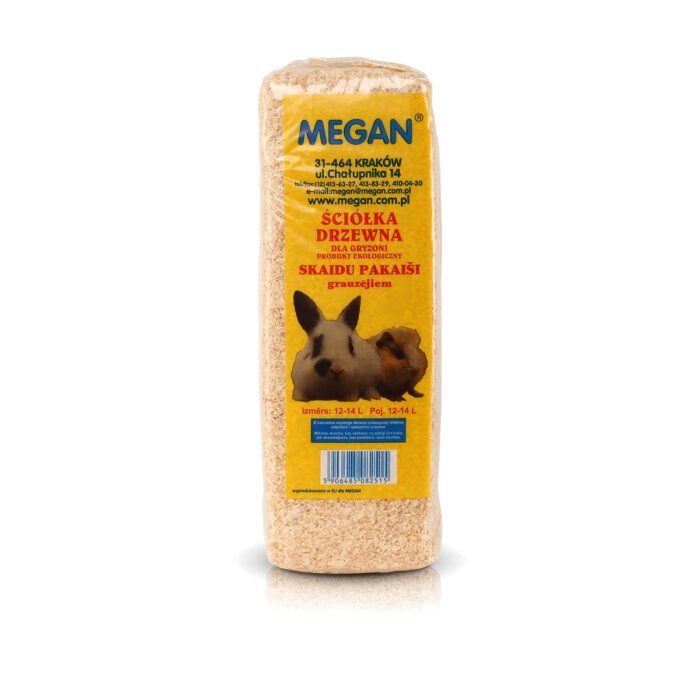
- Sawdust for rodents: Cage bedding. Check what wood the sawdust is made from.
- Fruity rodent treat: A fruity treat for rodents, given in small amounts.
In brief
- Hamsters are usually best kept alone, because adults in a group can be aggressive1,2.
- Bedding should be deep, clean, absorbent and low in dust, and the sources do not give its thickness in centimetres1,2.
- Place the cage indoors, at a temperature of around 18 to 26°C, away from the television and vacuum cleaner1,2.
In this article
What does a hamster need to start with?
To start you need a cage, bedding, a house, a wheel, a water bottle and food. The list below gathers what the Merck Veterinary Manual and the RSPCA recommend1,2.
- A well-ventilated cage that is easy to clean1.
- Deep bedding in which the hamster can dig1,2.
- A cardboard or wooden house for sleeping, and tunnels1.
- A wheel with a solid, not wire, running surface, large enough1.
- A water bottle with a spout and constant access to fresh water2.
- Hamster food: pellets or a seed mix2.
- Small amounts of fresh greens and vegetables as a supplement2.
At domowypupil.pl you can buy food, bedding and treats for hamsters. The shop does not sell cages, wheels, houses or water bottles, so you will need to buy those elsewhere.
Key points
- Hamsters are usually best kept alone.
- Bedding should be deep, clean, absorbent and low in dust.
- The wheel should have a solid, not wire, running surface.
- Do not give a hamster grapes or rhubarb.
Can a hamster live with another hamster?
Better not: Merck states that hamsters are usually best kept alone, because adults in a group can be aggressive, even siblings1. The RSPCA adds that Syrian and Chinese hamsters should not live together2.
"Hamsters are usually best kept alone."
Merck Veterinary Manual, "Providing a Home for a Hamster" (translated from English)
A hamster is active at night2. You will therefore see the most activity in the evening and at night.
What bedding, wheel and house for a hamster?
Bedding should be deep, clean, absorbent and low in dust1. The RSPCA writes that it should be deep enough for the hamster to dig in, and recommends dust-free wood shavings or maize cob pellets without preservatives2.
Neither Merck nor the RSPCA gives the thickness of bedding in centimetres, so we do not state it here1,2. Merck advises avoiding cedar and pine bedding, as it may be toxic, so with sawdust for rodents check on the packaging what wood it is made from1.
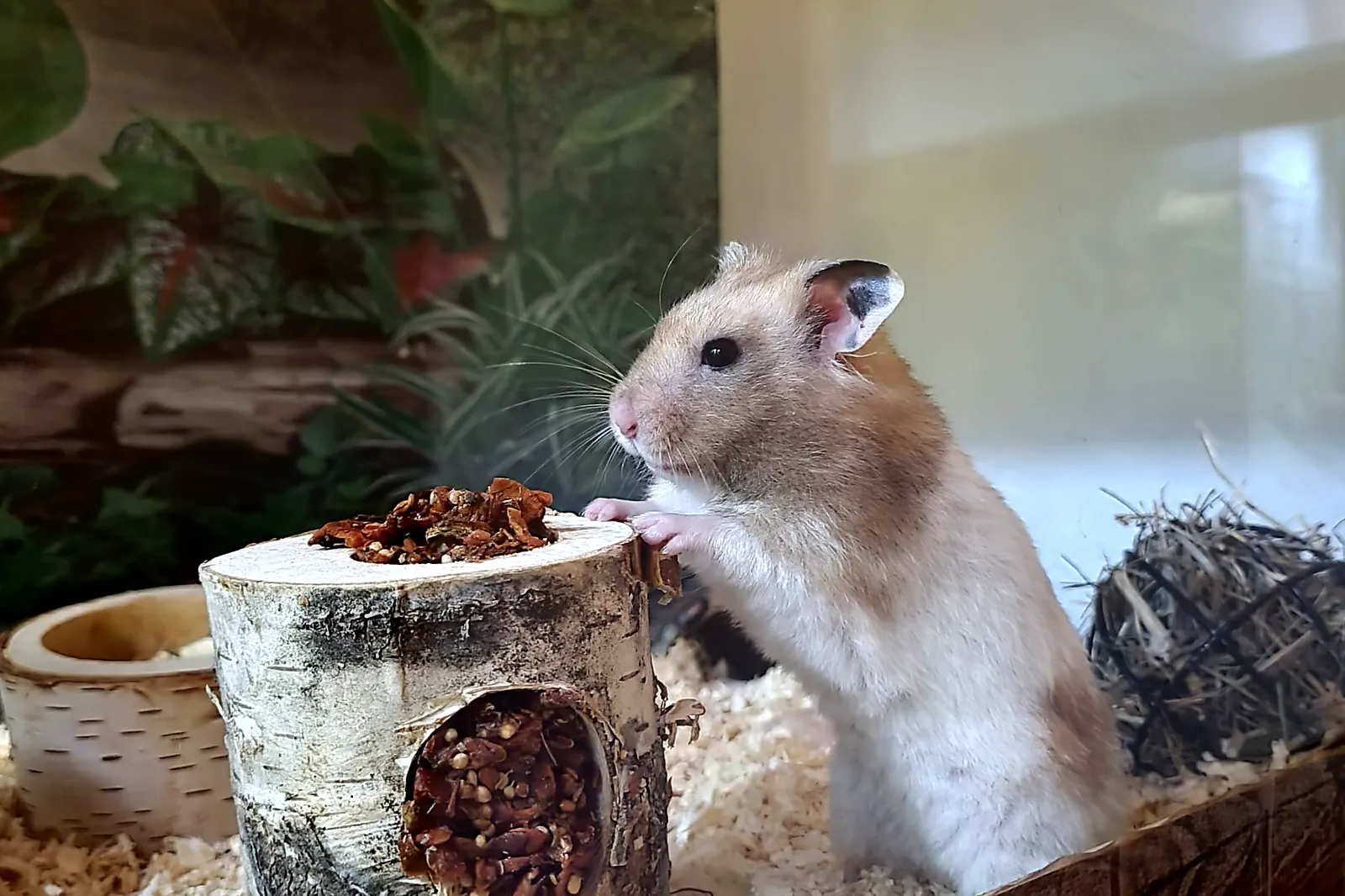
The wheel should have a solid, not wire, running surface and be large enough1. The sources do not give its diameter, nor the dimensions of the cage1,2. For sleeping, a cardboard or wooden house is enough, and a hamster must always have a hiding place1,2.
At domowypupil.pl
-
For small animals
Sawdust for rodents
7,29 zł incl. VAT Add to basket -
For rodents and rabbits
Staple food for rodents
from 7,13 zł incl. VAT Select options This product has multiple variants. The options may be chosen on the product page
What to feed a hamster, and what not to give it?
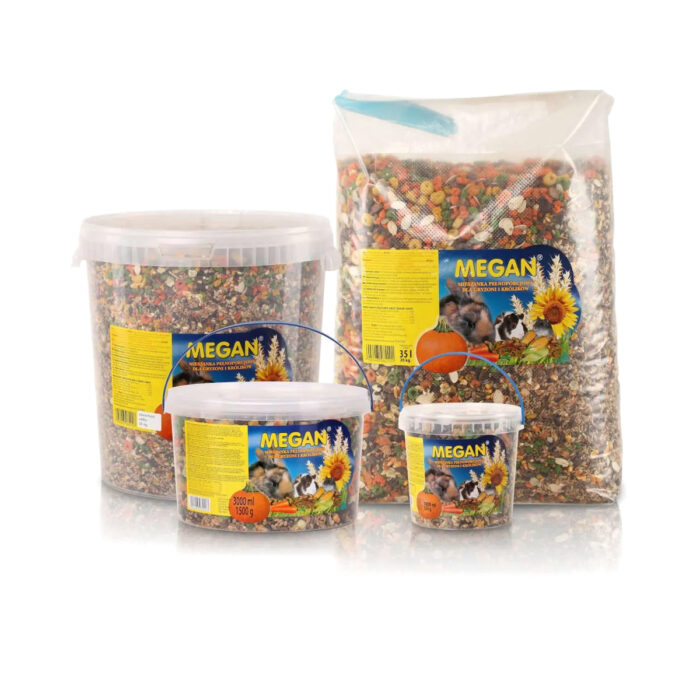
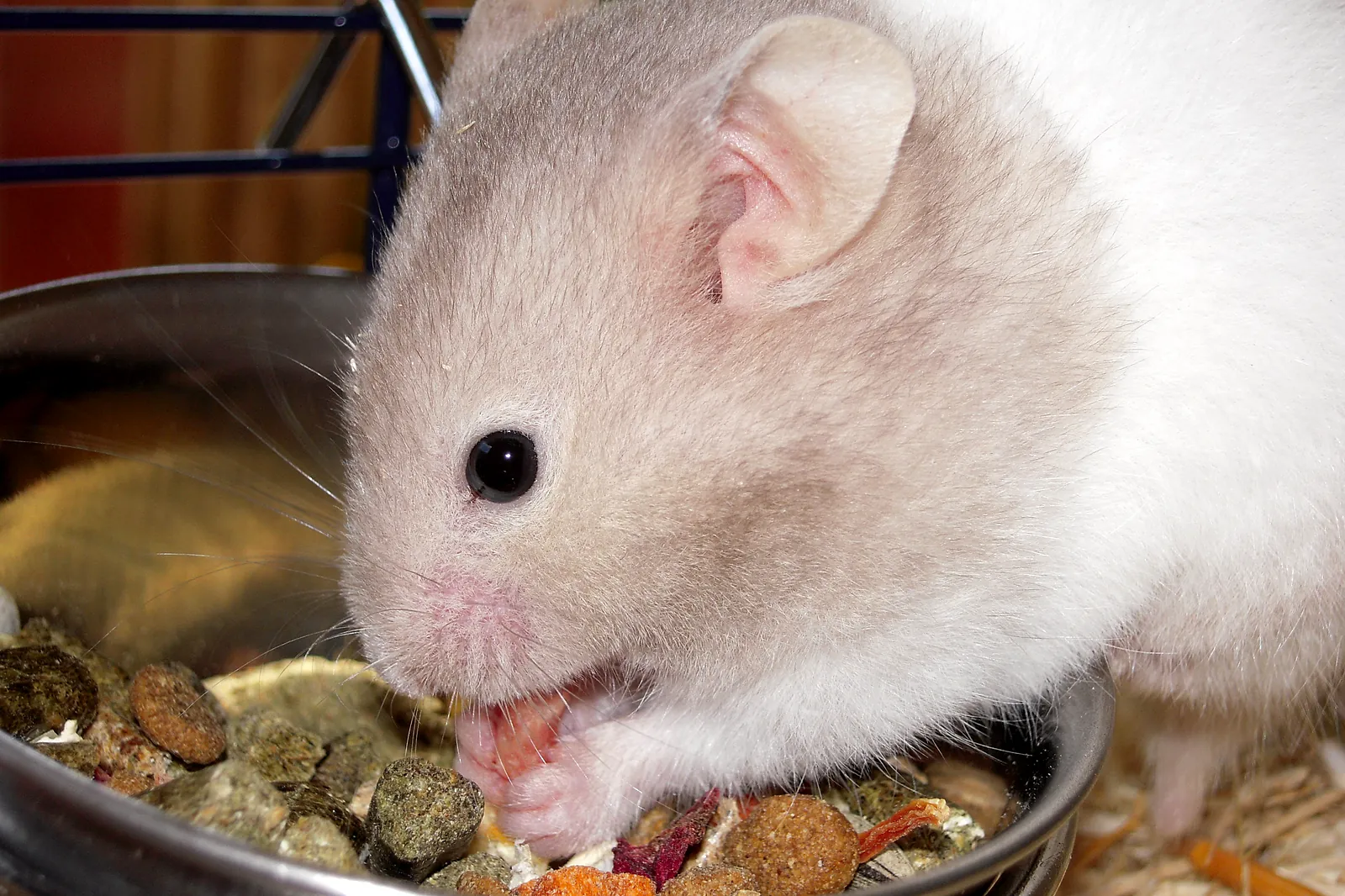
The staple is pellets or a seed mix prepared for hamsters2. Add to that small amounts of greens, washed root vegetables and pieces of fruit, for example apple2.
General rodent foods, e.g. rodent and rabbit food ECONOMY, also have a list of species on the label. Choose one that lists hamsters.
A hamster should not be given grapes or rhubarb at all.
The RSPCA lists grapes and rhubarb as foods that must not be given2. Also avoid sudden changes of diet and stale food, and give water preferably from a bottle with a spout2.
A hamster carries food in its cheek pouches, and scattering or hiding food in the cage protects it from boredom2. At the shop you will find ZOO BOX Premium Line in the hamster version, MEGI mixes and treats in the category food for rodents and rabbits.
Please note. Do not give a hamster grapes or rhubarb: the RSPCA warns that they may be toxic to rodents2.
Where to put a hamster's cage?
Indoors, at a temperature of around 18 to 26°C and in a well-ventilated place1,2. The RSPCA advises keeping a hamster away from devices that emit ultrasound, such as a television, monitor, vacuum cleaner or the sound of running water2.
If you are looking for a different animal, see the guides starter kit for a rabbit and what to feed a chinchilla. If a hamster loses its appetite or has wet droppings, contact a vet straight away2.
Frequently asked questions
What food for a hamster?
Pellets or a seed mix prepared for hamsters, plus small amounts of greens, vegetables and fruit. Do not give grapes or rhubarb.
How many cm of bedding for a hamster?
The sources we use do not give a figure. Merck and the RSPCA write about deep bedding in which the hamster can dig.
Can two hamsters live together?
Usually not. Adult hamsters in a group can be aggressive, even siblings, so it is best to keep them alone.
What wheel for a hamster?
One with a solid, not wire, running surface and large enough. The sources do not give a specific diameter.
Sources
- Merck Veterinary Manual (owner's version), "Providing a Home for a Hamster", Natalie Antinoff, DVM, DABVP, merckvetmanual.com
- RSPCA, "Keeping hamsters as pets" and subpages "Hamster environment" and "Hamster diet", rspca.org.uk
Photos: photo: Lo, Wikimedia Commons, CC0; photo: Patrik Čech, Wikimedia Commons, CC BY-SA 4.0, crop changed; photo: Domser, Wikimedia Commons, CC BY-SA 3.0, crop changed.
Prepared by the domowypupil.pl editorial team on the basis of the sources listed above. The article is for information only and does not replace the advice of a vet.