 Guide: cat


What to buy
- Poultry meat training treats 100 g: Meat treats for rewarding a dog during training.
- Beef training treats, 100 g: Beef meat treats for rewarding during training.
- Beef meat strips 5 pcs (90 g): Beef meat strips, 5 pieces per pack.
In brief
- Vets at VCA and WSAVA recommend that treats should provide a dog or cat with less than 10% of daily calories, with the remaining 90% coming from complete food.
- In dog training, treats that are easy to divide into many small pieces work well, and they count towards the same daily calorie allowance.
- Give chews and pig ears under supervision, clear away leftovers and wash your hands afterwards, and avoid cooked and raw bones.
In this article
How many treats a day can a dog have?
Enough that they provide no more than 10% of daily calories. VCA recommends that a dog gets 90% of its energy from complete food, and the remaining 10% can come from treats1. WSAVA, the World Small Animal Veterinary Association, writes of less than 10%2.
VCA advises working out the dog's daily requirement, taking 10% of it as a "treat budget" and giving only 90% as food1. If you do not know your dog's requirement, work it out with your vet1.
| Dog's weight | Maximum from treats per day |
|---|---|
| 2 kg | 14 kcal2 |
| 10 kg | 47 kcal2 |
| 20 kg | 79 kcal2 |
| 30 kg | 108 kcal2 |
| 40 kg | 134 kcal2 |
The WSAVA table applies to an average healthy adult dog in ideal body condition2. For comparison, a dried pig ear weighing 56 g has 242 kcal according to WSAVA, which is several times the daily allowance of a 10 kg dog2.
Check the calorie content of a treat on the label, and if it is not there, WSAVA advises asking the company that makes the treat2. Megi bars, e.g. Megi poultry bar, are, according to the description in the shop, complete food for adult dogs and not a treat, so treat them as a meal.
Treats do not replace a meal, because every dog needs a complete diet2. A dog that is ill or on a veterinary diet may not tolerate ordinary treats, so in that case ask your vet about them1,2. You can find ready-made treats in the category dog treats.
Which treats work well in dog training?
Ones that are easy to divide into many small pieces, small dry food or low-calorie treats3. VCA adds that the best reward is the one that really motivates your dog3.
Training treats also count towards the 10% of calories3. VCA points out that "high-value" rewards work best during training, but many of them are very high in calories3.
Training treats also count towards the daily calorie allowance.
PDSA, a British veterinary organisation, advises rewarding with healthy food, e.g. a very small slice of carrot. If your dog responds only to less healthy rewards, give it a smaller main meal on training days4.
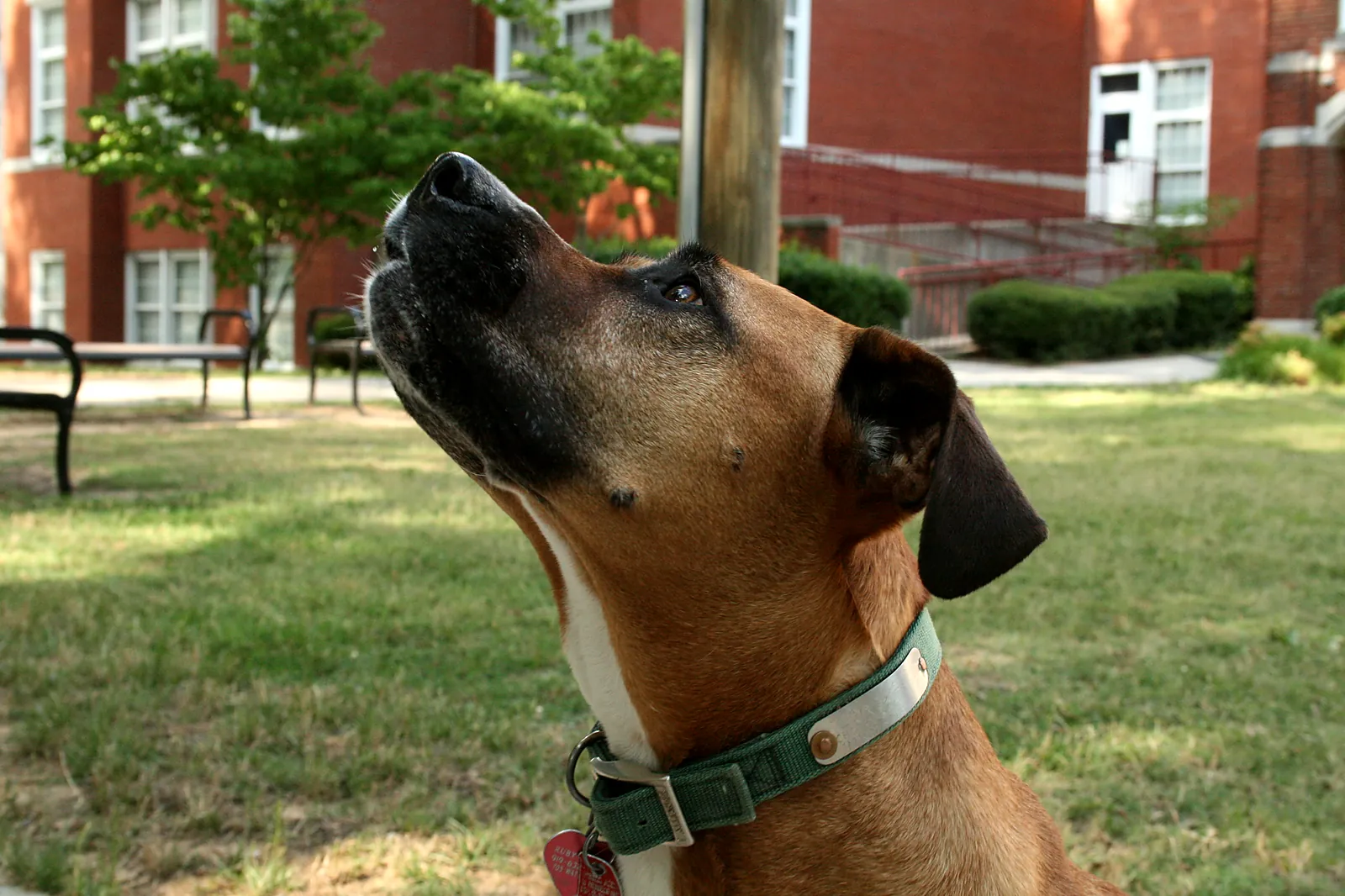
For training, the shop has poultry training treats. Before a session, measure out the portion of rewards and put the rest away, so that it is easier to stick to the budget3.
If your dog prefers beef, the range also includes beef training treats. Introduce a new treat one at a time and start with a small piece as a trial, especially if your dog has a sensitive stomach1.
At domowypupil.pl
-
For dogs and cats
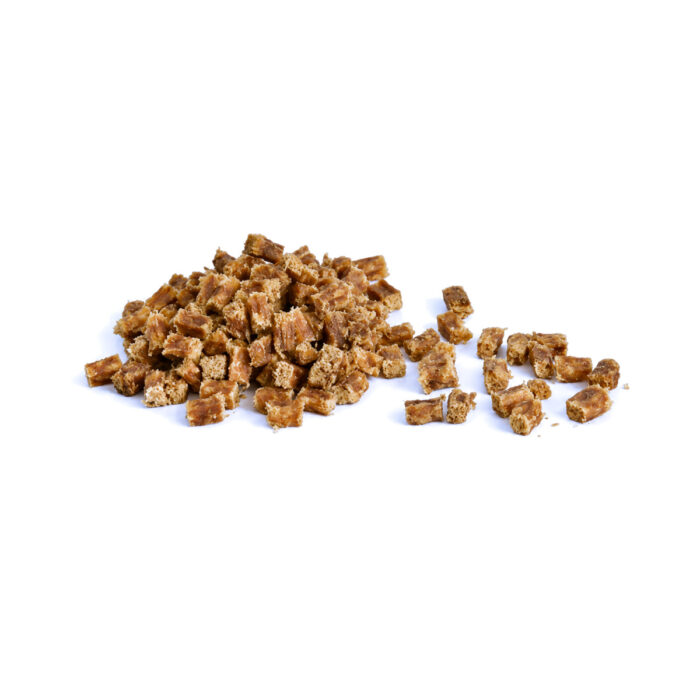
Poultry training treats 100g
10,86 zł incl. VAT Add to basket -
For dogs and cats
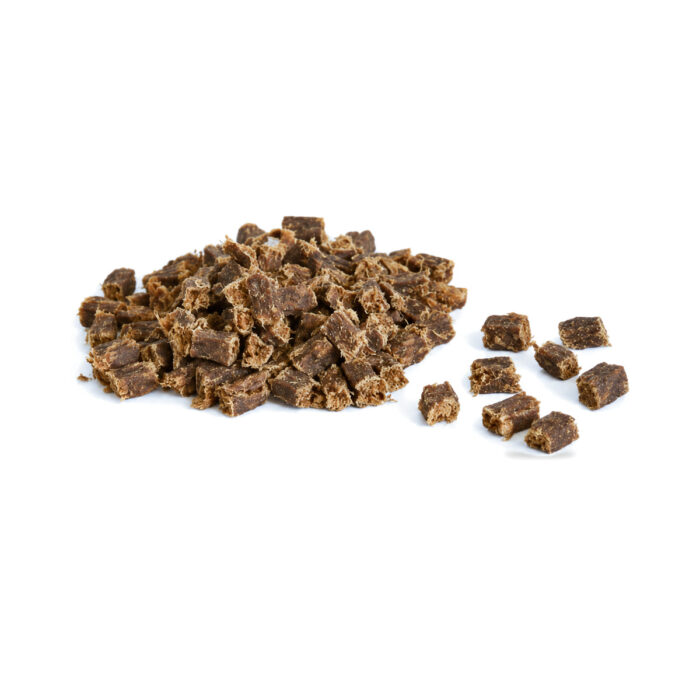
Beef meat training treats: 100g
11,87 zł incl. VAT Add to basket
How can I give my dog chews safely?
Always under supervision. WSAVA recommends watching your dog with chews, treats and toys, and choosing a treat of a size and shape that reduces the risk of choking2. This rule applies to every chew, including ones bought in a shop.

WSAVA warns that bones, both cooked and raw, can be very dangerous and can seriously harm a dog that chews or swallows them2. It also advises against very hard chews, e.g. antlers and hooves, and against treats with sharp edges2.
If you notice worrying symptoms in your dog after chewing, contact your vet.
Key points
- Treats should provide no more than 10% of daily calories.
- Training treats also count towards the daily calorie allowance.
- Supervise your dog with chews, treats and toys.
- Bones, cooked and raw, can be very dangerous.
Is a pig ear safe for a dog?
They can be given, but with good hygiene. In 2019 in the USA, the FDA and CDC investigated Salmonella infections in people linked to contact with pig ears for dogs: 154 cases in 34 states, with 35 people hospitalised5.
The CDC declared the outbreak over on 30 October 2019, and neither institution now recommends giving up these treats altogether5. However, WSAVA points out that unprocessed raw animal-origin treats, e.g. contaminated pig ears, carry a risk of transmitting microorganisms2.
- Supervise your dog while it has a treat5.
- Take away leftovers when it has finished5.
- Keep treats away from small children5.
- Clean the places the treat has touched and wash your hands5.
- Do not let your dog lick you, other members of the household or surfaces in the home5.
Follow the same rules with pig ear from the shop's range. Remember the calories too: a pig ear is a large treat, so subtract it from the dog's daily allowance2.
The FDA advises contacting a vet if an animal has symptoms of Salmonella infection5. People with symptoms should see a doctor5.
Can a cat have treats?
Yes, as a small extra. The same limit applies to a cat: treats should provide less than 10% of daily calories and must never replace a meal6,7. VCA adds that too many treats can put a cat off its regular food6.
A cat's allowance is small. According to WSAVA, an average healthy adult cat weighing 4 kg should get no more than 22 kcal a day from treats, and one weighing 6 kg no more than 26 kcal7.
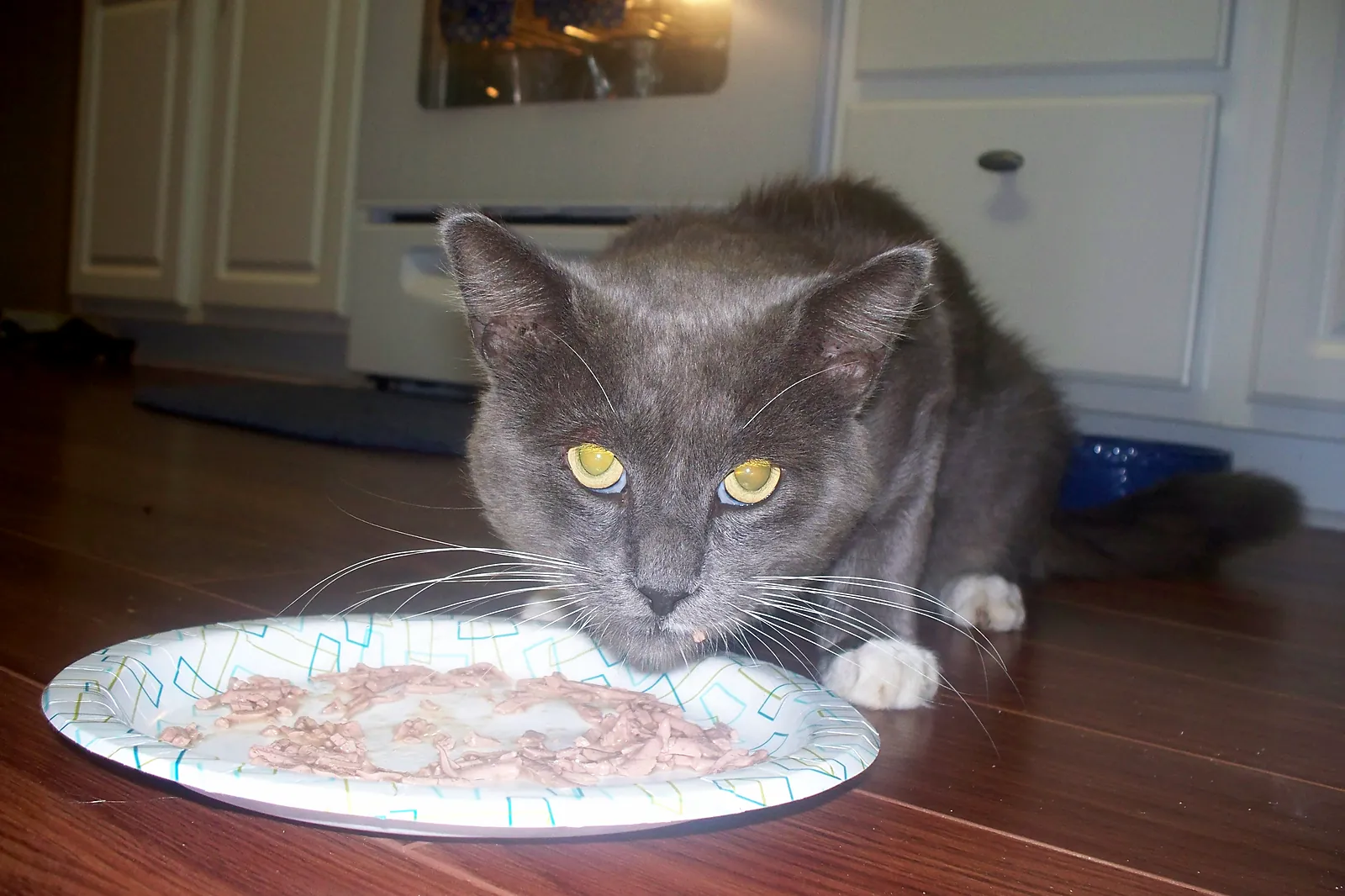
This guide mainly describes treats for dogs, and for a cat you should choose treats made for cats. VCA also suggests another approach: give part of the cat's daily portion of regular food as a reward, e.g. in a food toy6.
WSAVA warns that bones, cooked and raw, can also seriously harm a cat, and advises watching it with chews and treats7. If your cat is ill or on a veterinary diet, ask your vet about treats6.
Besides food, a cat also needs a well-chosen litter tray, which we cover in the guide which cat litter to choose.
Moderation in feeding also applies to fish, where excess food spoils the water: see the guide how to feed aquarium fish.
Frequently asked questions
How many treats a day can a dog eat?
Enough that they provide less than 10% of its daily calories. According to the WSAVA table, for an average healthy adult dog weighing 10 kg that is no more than 47 kcal a day.
Can a dog be given bones?
WSAVA warns that bones, both cooked and raw, can be very dangerous and can seriously harm a dog. It also advises against very hard chews, such as antlers and hooves.
Is a pig ear for dogs safe?
It can be given, but with good hygiene: supervise your dog, clear away leftovers, keep the treat away from small children and wash your hands. In 2019 in the USA, Salmonella infections in people were linked to contact with pig ears for dogs.
Can a cat eat dog treats?
For a cat, choose treats made for cats. For a cat, treats are a small extra that should provide less than 10% of daily calories.
Sources
- VCA Animal Hospitals, "Dog Treats", CAVN: Caitlin Grant, DVM; Krista Williams, DVM; Robin Downing, DVM (updated 26.09.2024), vcahospitals.com
- WSAVA (World Small Animal Veterinary Association), "Feeding treats to your dog", version 2 (PDF, 2024), wsava.org
- VCA Animal Hospitals, "Using Food and Treats for Training Dogs", CAVN: Rebecca Hunt, RVT; Sarah Wilson, DVM (updated 22.05.2026), vcahospitals.com
- PDSA, "A guide to reward-based training", pdsa.org.uk
- FDA, "FDA Investigates Contaminated Pig Ear Pet Treats Connected to Human Salmonella Infections" (as of 1.11.2019), fda.gov
- VCA Animal Hospitals, "Cat Treats", CAVN: Caitlin Grant, DVM; Courtney Barnes, DVM; Krista Williams, DVM; Robin Downing, DVM (updated 26.09.2024), vcahospitals.com
- WSAVA (World Small Animal Veterinary Association), "Feeding treats to your cat", version 2 (PDF, 2024), wsava.org
Photos: Photo: Shane Adams, Wikimedia Commons, CC BY 2.0, crop changed; Photo: Ildar Sagdejev, Wikimedia Commons, CC BY-SA 3.0, crop changed; Photo: Slyronit, Wikimedia Commons, CC BY-SA 4.0, crop changed; Photo: Öljylautta, Wikimedia Commons, Public domain.
Prepared by the domowypupil.pl editorial team on the basis of the sources listed above. The article is for information only and does not replace the advice of a vet.