 Guide


In brief
- The RSPCA recommends feeding fish 2 to 3 times a day and giving as much as they eat within 2 to 5 minutes.
- According to the RSPCA it is better to underfeed fish than overfeed them, because poor water quality harms them more than a lack of food.
- Remove uneaten food every day, and keep dry food for at most about 2 months.
In this article
How many times a day should aquarium fish be fed?
Most often 2 to 3 times a day1. The RSPCA, the British animal welfare society, recommends this rhythm rather than one meal a day and gives an example of feeding at about 7:00, 12:00 and 18:001.
Fish learn fixed times and according to the RSPCA then start to wait for feeding1. Feed nocturnal species, e.g. some catfish, at the end of the day, just before night1.
The Merck veterinary manual states that most aquarium fish need to be fed at least once a day3. The exception is predatory fish, which eat large portions: these are fed once or twice a week3.
How much food should I give fish?
As much as they eat within 2 to 5 minutes1. The RSPCA also advises matching the amount to the size and number of fish in the aquarium1.
If in doubt, give less. The RSPCA writes that it is better to underfeed fish than overfeed them, because poor water quality harms them more than a lack of food1.
It is better to underfeed fish than overfeed them, because poor water quality harms them more than a lack of food.
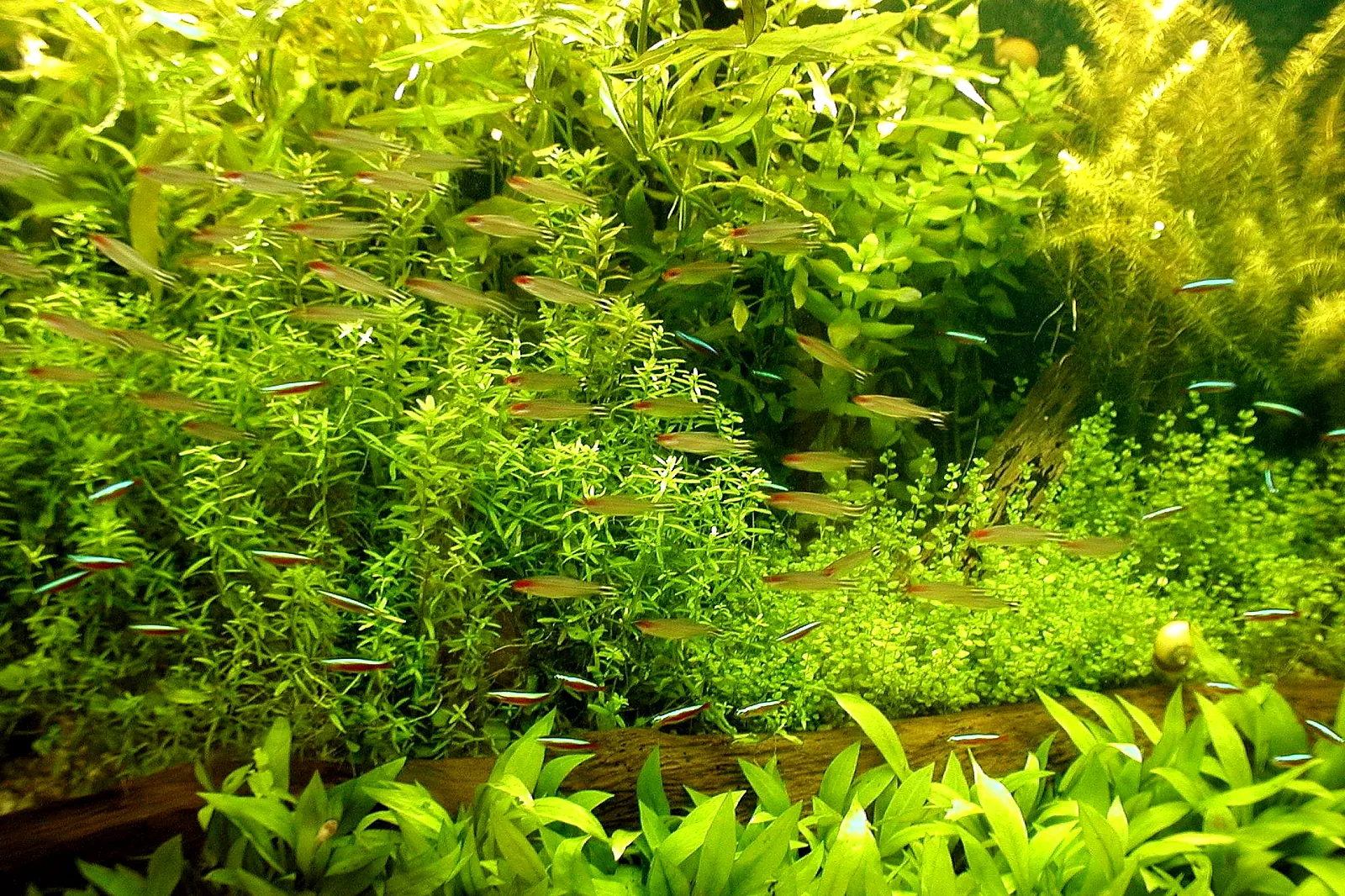
What are the dangers of overfeeding fish?
With disease and a dirty aquarium. This is how the owners' version of the Merck manual puts it2.
So according to Merck, feeding and removing uneaten food is a daily task at the aquarium, alongside checking the fish, the water temperature and the equipment4. Every 2 weeks Merck recommends changing part of the water and testing the water, including for ammonia, nitrites and nitrates4.
The same rule of clearing away leftovers applies to the bird feeder.
VCA, a chain of veterinary hospitals, writes that partial water changes every 2 to 4 weeks remove excess waste, uneaten food and harmful compounds5. According to Merck, the frequency of water changes depends on the stocking level of the aquarium4.
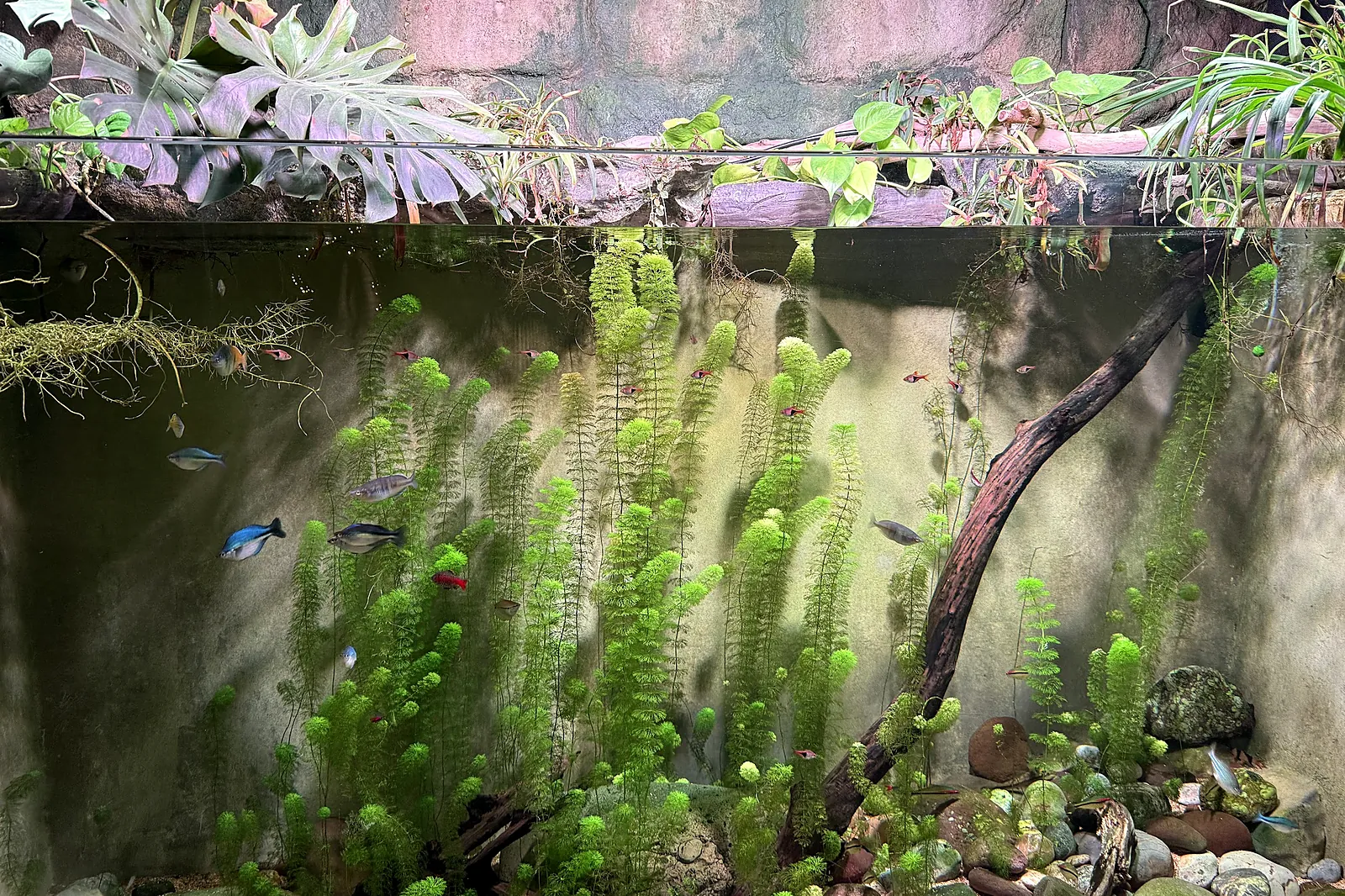
Key points
- Feed fish 2 to 3 times a day.
- Give as much as they eat within 2 to 5 minutes.
- Remove uneaten food every day.
- Keep dry food for at most about 2 months.
Which food should I choose: flakes, pellets or frozen food?
The basis can be dry food: pellets, flakes or fine granules, because they usually have a balanced composition of nutrients2. Choose food for your species: the RSPCA advises not to buy, for example, flakes for tropical fish for a goldfish1.
It also matters where the fish feed. For fish that feed near the surface give floating food, and for those living near the bottom food that sinks quickly3. The RSPCA adds that bottom and mid-water species need fast-sinking food or tablets1.
Flakes are worth supplementing with other food1. The RSPCA lists frozen daphnia and brine shrimp as a very good addition for tropical fish, and chopped vegetables, e.g. peas and spinach, for a goldfish1.
Merck recommends one main food supplemented with others2. Live food is a good source of protein and fat, but may not provide a complete diet, and sometimes introduces parasites or disease into the aquarium2.
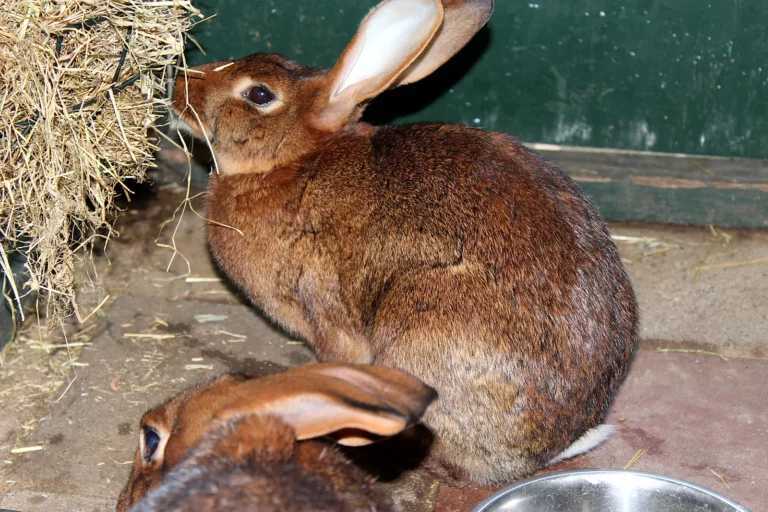
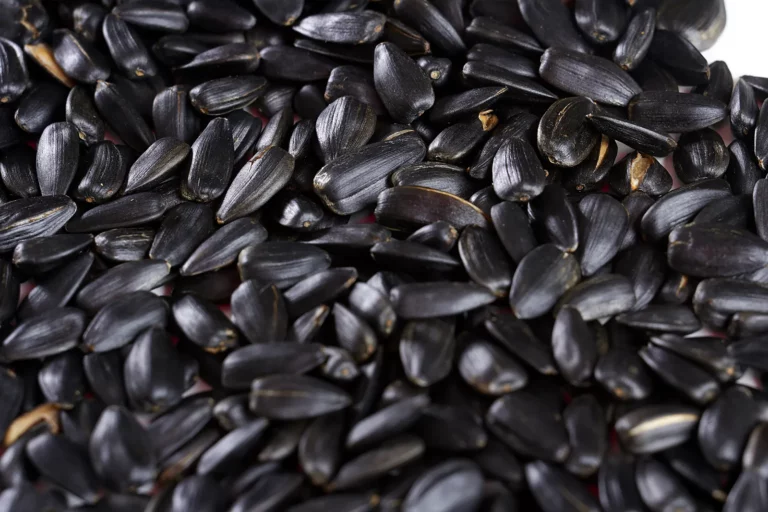
In the fish food category the shop also has dried mealworm larvae, which you will also find among foods for rodents and overwintering birds.
Do not store food for too long. Merck advises buying smaller packs more often rather than one large one for many months, and keeping dry food for at most about 2 months2.
Food and supplements can be found in the category Fish food.
At domowypupil.pl
-
For rodents and rabbits

Dried mealworm larvae 100g
7,62 zł incl. VAT Add to basket
How do I feed fish while I am on holiday?
Ask a trusted person to check the fish and equipment every day. The RSPCA points out that tropical fish need feeding every day1.
- Leave instructions on how to feed, and ask them not to overfeed the fish1.
- Prepare portions in advance1.
- An automatic feeder dispenses a measured portion every day, but you still need to check daily that it is working1.
- Do not use holiday feeder blocks: the RSPCA does not recommend them, because they quickly release a lot of food, which can rot in the water1.
If the fish stop eating or behave differently from usual, contact a vet.
If you are also leaving a dog or cat in someone's care while you are away, you will find the rules for portioning treats in the guide treats for dogs and cats.
Frequently asked questions
How many times a day should you feed aquarium fish?
The RSPCA recommends 2 to 3 times a day rather than a single meal. Predatory fish that eat large portions are fed less often.
How much food should you give aquarium fish at one time?
As much as they eat within 2 to 5 minutes. Adjust the amount to the size and number of fish, and remove any leftovers.
Can aquarium fish go a week without food?
The sources do not give such a period. The RSPCA points out that tropical fish need feeding every day, so ask someone to look after them while you are away or use an automatic feeder.
How long can dry food for aquarium fish be stored?
According to the Merck manual, dry food should be kept for no more than about 2 months. It is better to buy smaller packs more often.
Sources
- RSPCA, "Fish diet" (no date on the page), rspca.org.uk
- Merck Veterinary Manual (owner version), "Providing a Home for Fish", Ruth Francis-Floyd, DVM; Barbara D. Petty, DVM, University of Florida (full review February 2020), merckvetmanual.com
- Merck Veterinary Manual (veterinarian version), "Nutritional Diseases of Fish", Barbara D. Petty, DVM; Ruth Francis-Floyd, DVM; Roy P. E. Yanong, VMD, University of Florida (full review May 2022), merckvetmanual.com
- Merck Veterinary Manual (owner version), "Routine Health Care of Fish", section "Essential Maintenance", Ruth Francis-Floyd, DVM; Barbara D. Petty, DVM (full review February 2020), merckvetmanual.com
- VCA Animal Hospitals, "Pet Fish: Setting Up an Aquarium", Gregory Rich, DVM (29 January 2025), vcahospitals.com
Photos: Photo: Holger Krisp, Wikimedia Commons, CC BY 3.0, crop changed; Photo: Paolo Neo, Wikimedia Commons, Public domain; Photo: Netha Hussain, Wikimedia Commons, CC0.
Prepared by the domowypupil.pl editorial team on the basis of the sources listed above. The article is for information only and does not replace the advice of a vet.