 Guide: rabbit
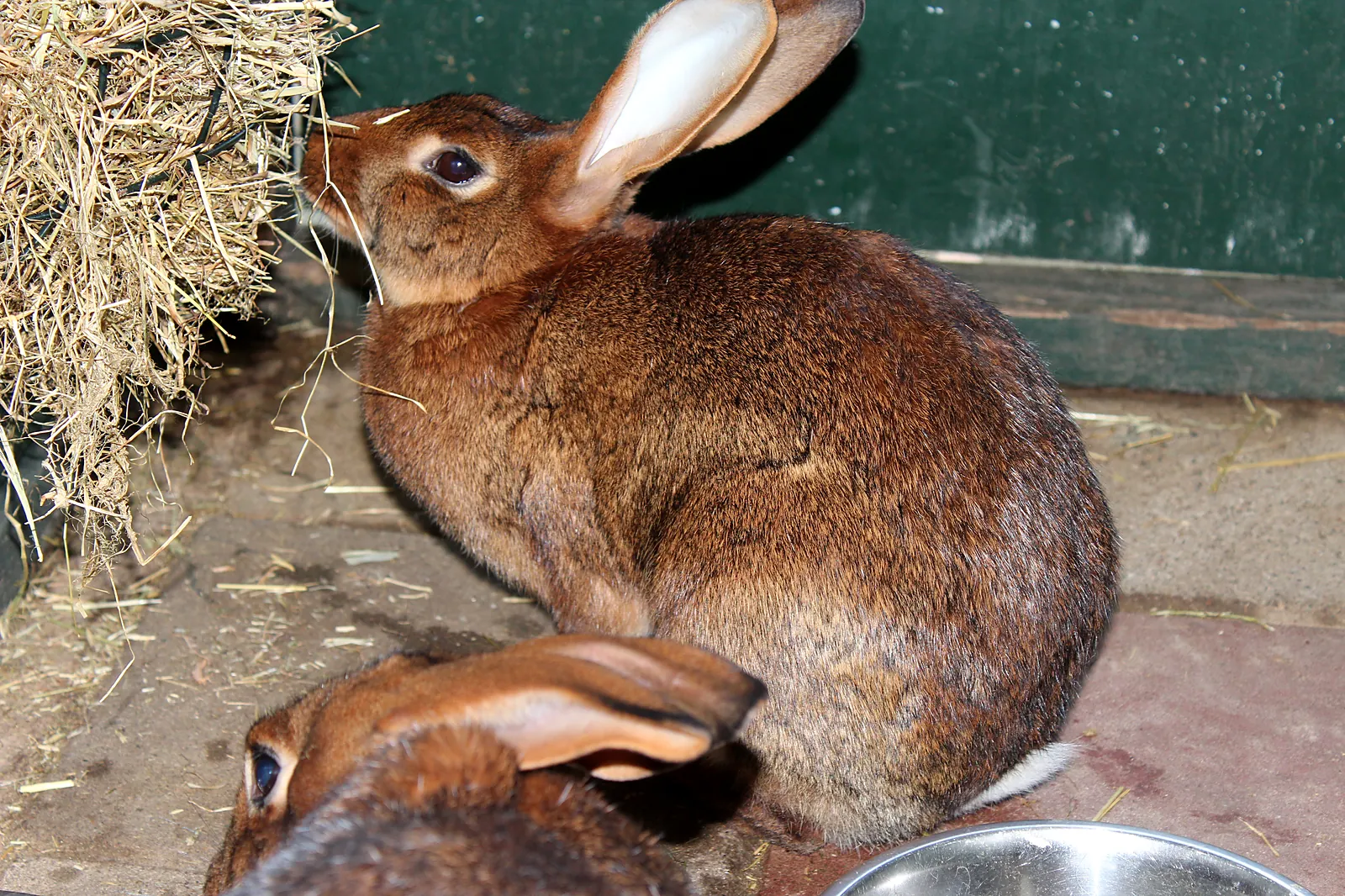


What to buy
- hay for rodents: The basis of the daily diet of rabbits, guinea pigs and chinchillas.
- Złota Seria Rabbit: Rabbit food as a supplement to hay, given in a measured portion.
- Sawdust for rodents: Cage bedding. Check what wood the sawdust is made from.
In this article
What should I buy for a rabbit to start with?
The most important purchases to start with are hay, food and a supply of fresh leafy vegetables. All the sources we checked say that the basis of a rabbit's diet is hay or grass, and that food and vegetables are the smaller part of the portion1,2,3.
- Hay: a large supply, because a rabbit should have constant access to it1. In the shop this is hay for rodents.
- Food: a small daily portion alongside hay, for example Złota Seria Rabbit or MEGI Mixes. Check the dose on the label.
- Fresh leafy vegetables and herbs: daily, bought as you go2.
- Treats, for example rodent sticks: only as an extra, not instead of hay.
- Bedding for the cage or litter tray: the shop sells shavings for rodents, but the nutrition sources we use do not assess types of bedding.
The shop does not offer cages, water bottles or bowls, so you will buy them elsewhere. The sources we use also do not give cage dimensions, so we do not list them here. We have gathered hay, food and treats in the category food for rodents and rabbits.
At domowypupil.pl
-
For small animals
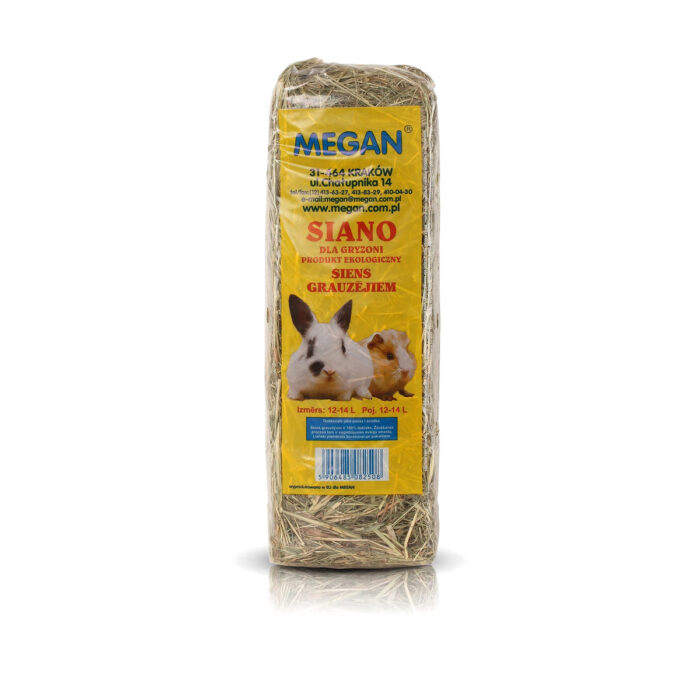
Hay for rodents
6,00 zł incl. VAT Add to basket -
For rodents and rabbits
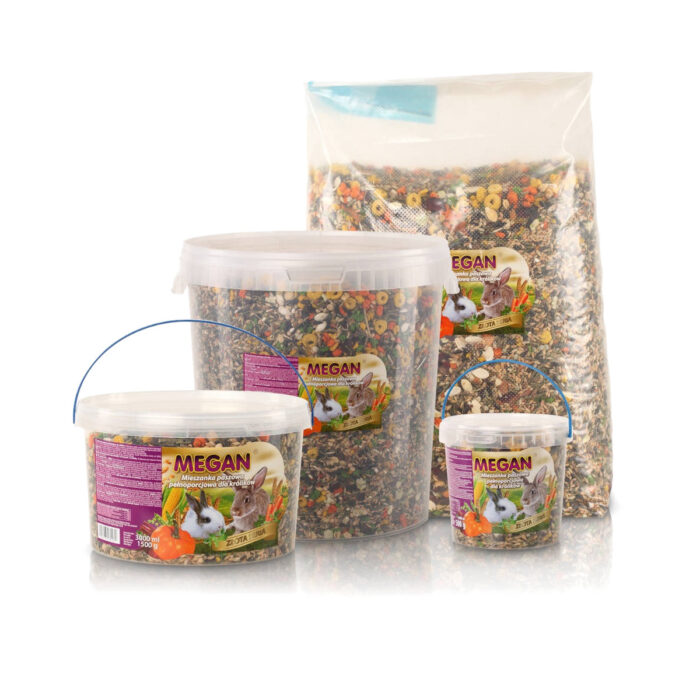
Złota Seria Rabbit
from 8,17 zł incl. VAT Select options This product has multiple variants. The options may be chosen on the product page
How much hay does a rabbit need?
As much as it eats: hay should be available without limit throughout the day1,2. PDSA gives as a minimum a daily bundle at least as big as the rabbit itself2.
The sources give the share of hay in the diet slightly differently: the Scottish government guidance at least 80%3, RSPCA and PDSA about 85%1,2, and the Merck Veterinary Manual 85 to 90%4. The difference is small and the conclusion is shared: hay is the largest part of the portion.
The fibre in hay constantly wears down a rabbit's continuously growing teeth3. Merck recommends grass hay, for example timothy, with a low calcium content4.
Hay is not an addition to food; food is an addition to hay.
How much food and pellets should I give a rabbit?
Not much, but the sources give different measures and there is no single figure for all rabbits. The comparison below shows how four organisations describe the same principle1,2,3,4.
| Source | Daily portion of pellets |
|---|---|
| PDSA | 1 tablespoon, 2 tablespoons for a rabbit over 3.5 kg2 |
| RSPCA | 25 g per kilogram of body weight, about 5% of the diet1 |
| Scottish government guidance | at most 5 to 10% of the daily portion3 |
| Merck Veterinary Manual | about 1/4 cup per 5 pounds (approx. 2.3 kg) of body weight4 |
PDSA warns that too many pellets means less hay is eaten hay, and this can lead to dental overgrowth and gut stasis2. So serve food in a measured portion, and do not keep topping up the bowl.
The same principle applies to every food in the range, including PREMIUM LINE foods for rodents and rabbits. Check the form of the food and the dose for a rabbit on the label.
With food from the shop, follow the dosage on the label and observe your rabbit. If hay is left over and the food bowl is empty, reduce the portion of food.
How should I serve a rabbit food and a mix?
Serve every food, including a mix, as an addition to hay, because hay should make up about 85% of a rabbit's diet1,2Measure out the portion instead of constantly topping up the bowl.
In the shop you will find MEGI mixes and Złota seria for rabbits. Watch whether the rabbit eats the whole portion, not just selected pieces, and whether it still eats hay readily. If it leaves hay, reduce the portion of food.
Key points
- Hay should be available without limit throughout the day.
- Serve food in a measured portion, and do not keep topping up the bowl.
- Carrot is a rare treat, not an everyday vegetable.
- Introduce every change of diet slowly.
Which vegetables should I give a rabbit, and which only on special occasions?
Give green leaves, leafy vegetables and herbs every day. RSPCA says this is about 10% of the diet1, and PDSA recommends a handful twice a day, from at least 5 to 6 kinds of plants2.
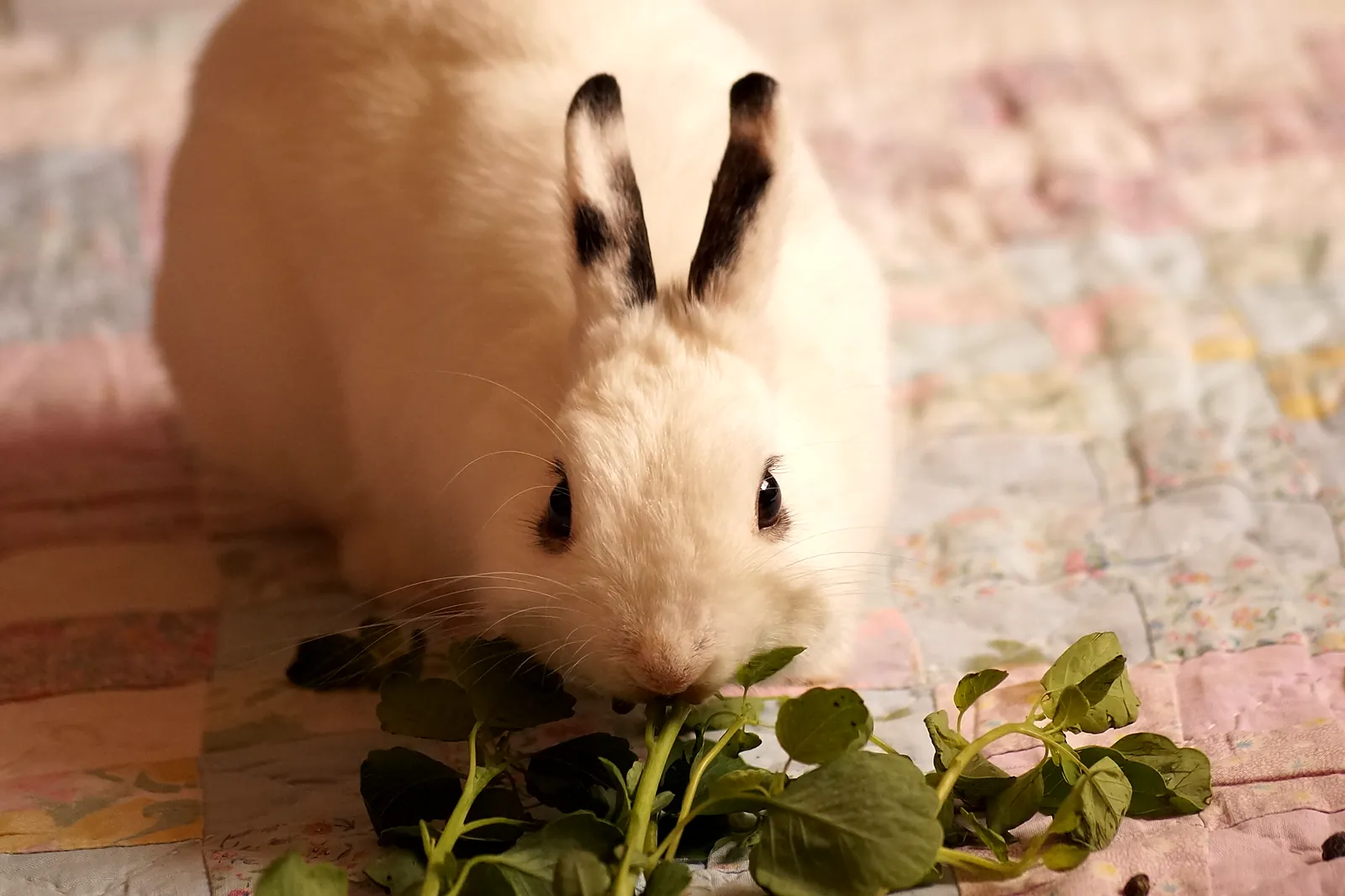
Carrot is not suitable for a daily diet, because it contains a lot of sugar1,3. RSPCA suggests green carrot tops instead, and PDSA allows carrot as an occasional, small treat1,2.
Give fruit rarely and always without stones or pips1. Introduce new foods gradually, because a sudden change of diet risks digestive upset2.
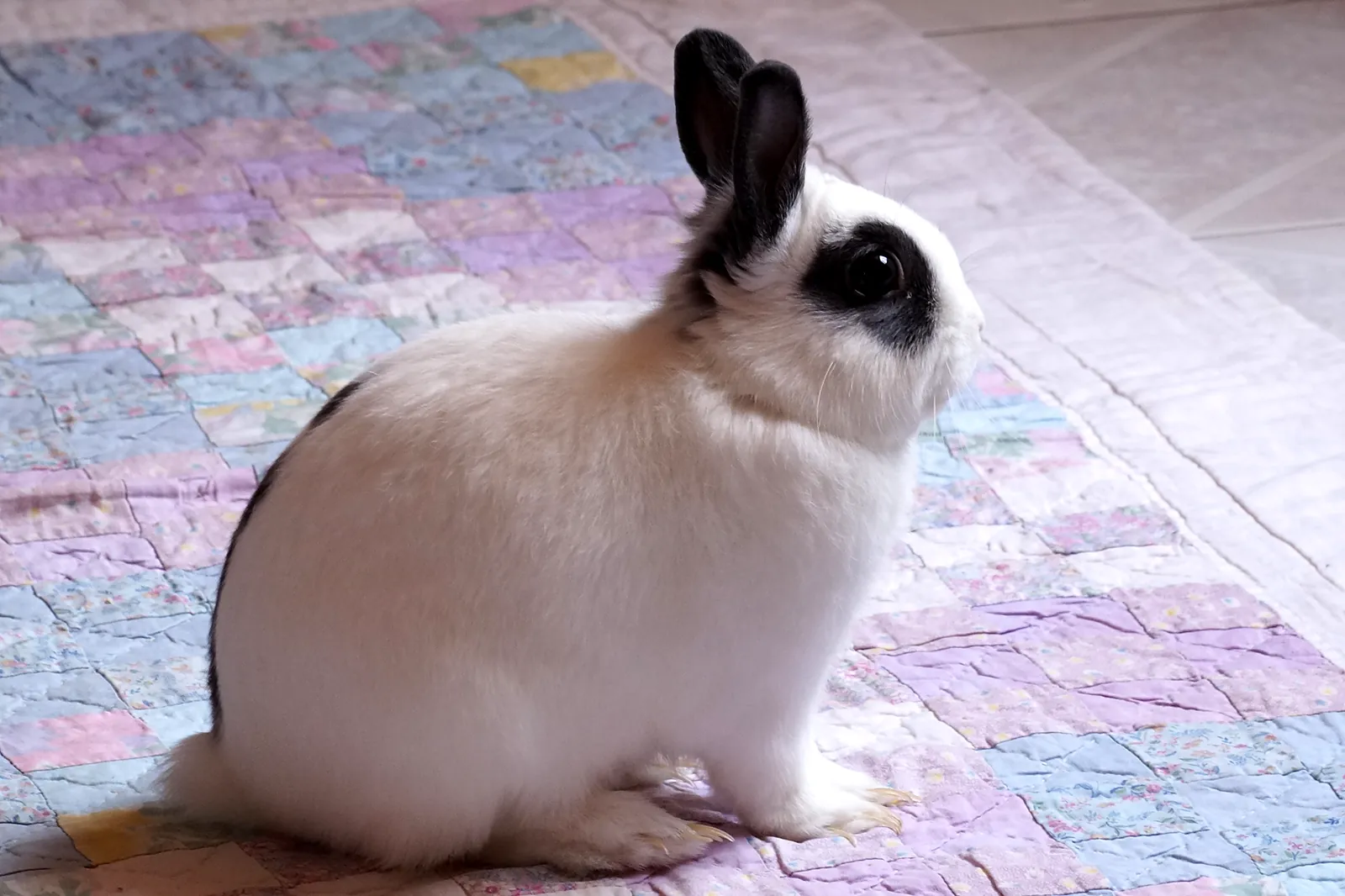
If you also have other rodents, take a look at the guides on what to feed a chinchilla and what a hamster needs. If your rabbit stops eating hay or you have doubts about its teeth, contact a veterinary surgeon.
Please note. Introduce every change in a rabbit's diet slowly, not from one day to the next2.
Frequently asked questions
What is the best food for a rabbit?
The basis is hay, and food is a small addition served in a measured portion. With food from the shop, follow the dosage on the label and watch whether the rabbit still eats hay readily.
How many pellets a day for a rabbit?
PDSA recommends about a tablespoon a day, and two for a large rabbit. RSPCA gives 25 g per kilogram of body weight. If the rabbit eats less hay, reduce the portion.
Can a rabbit eat carrots?
Yes, but rarely and in small pieces, because carrot contains a lot of sugar. RSPCA suggests carrot tops instead.
What hay should I buy for a rabbit?
Grass hay, of good quality and dust-free. Merck lists timothy and hays with a low calcium content. The rabbit should have access to it all day.
Sources
- RSPCA, "Rabbit diet", rspca.org.uk
- PDSA, "Your rabbit's diet", pdsa.org.uk
- Scottish Government, "Pet rabbit welfare guidance", gov.scot
- Merck Veterinary Manual (owners' version), "Diet for rabbits", merckvetmanual.com
Photos: photo: Semin, Wikimedia Commons, CC BY-SA 4.0, crop changed; photo: Padaguan, Wikimedia Commons, CC BY-SA 4.0, crop changed; photo: Padaguan, Wikimedia Commons, CC BY-SA 4.0, crop changed.
Prepared by the domowypupil.pl editorial team on the basis of the sources listed above. The article is for information only and does not replace the advice of a vet.